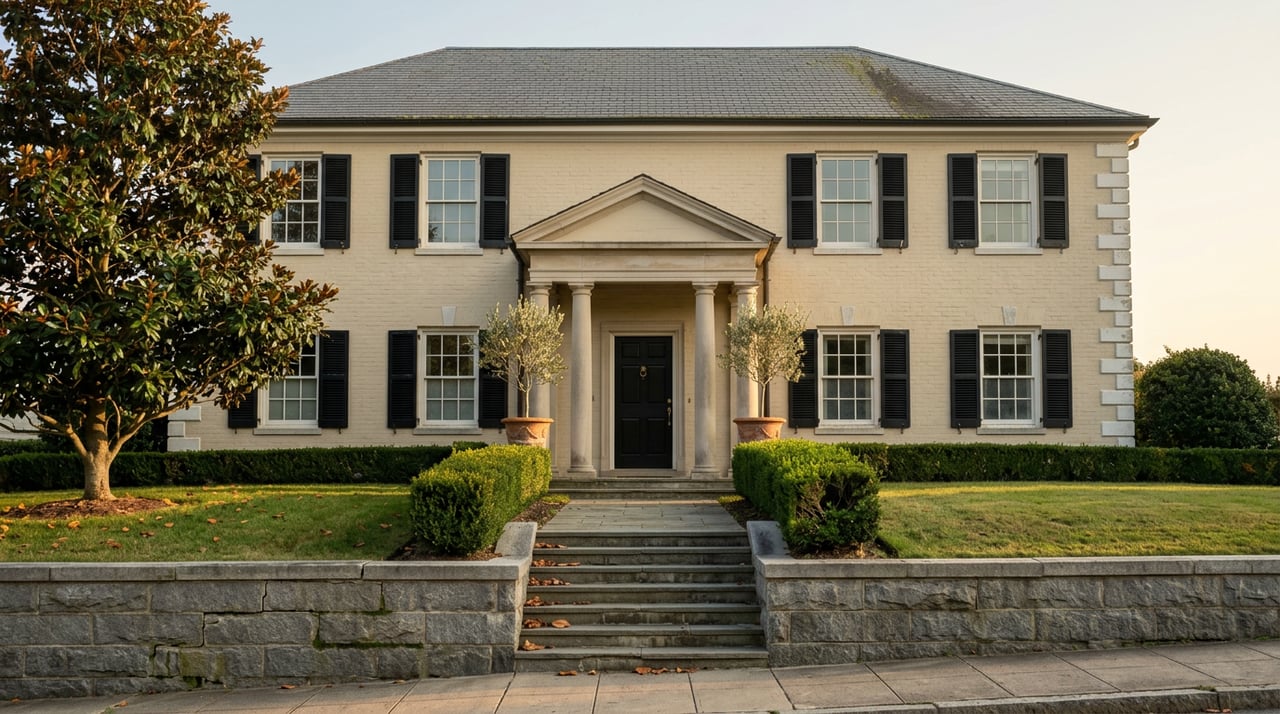
The Real Deal reported that Sotheby's agent Janet Schindler told the sellers of 3140 Pacific Avenue: "If they weren't going to be happy with $7.5 million, then we shouldn't price it there." She brought their four-bedroom home to market in late June. Within a month, after half a dozen offers, it closed at $12 million. That was 60 percent over asking and set a new ceiling for the neighborhood.
According to The Real Deal, nine days later, on July 31, Schindler closed on another Pacific Heights sale: 2881 Vallejo Street, a block from the Presidio with its own Golden Gate Bridge views. This one told a different story. Listed in October 2024 for $11.5 million, it sat through a rejected $9.4 million offer in May 2025 and a spot on SFGATE's list of the city's most expensive unsold homes before finally closing at $11.1 million, $400,000 under its original ask, after nearly two years on the market.
Same agent. Same neighborhood, both properties tucked against the Presidio's edge. Nine days apart on the closing calendar. One home sold for 60 percent over ask in under a month. The other took twenty-one months to sell for less than its opening price. If you're weighing Pacific Heights against another San Francisco neighborhood right now, the number that matters isn't the median list price you saw on a portal search. It's figuring out which of these two very different markets a given listing actually belongs to.
The Two Sales, Side by Side
| 3140 Pacific Avenue | 2881 Vallejo Street | |
|---|---|---|
| Listed | Late June 2026, $7.5M | October 2024, $11.5M |
| Sold | July 22, 2026, $12M | July 31, 2026, $11.1M |
| Time to close | Under a month | Nearly two years |
| Outcome | 60% over asking | Under original asking |
Both homes sit on prestige blocks. Both carry the kind of address that shows up in every "most desirable neighborhoods" list. And yet one attracted a bidding war fierce enough to make headlines, while the other needed twenty-one months and a rejected offer along the way before it found a buyer at a discount.
What "Mansion Shortage" Actually Means
The phrase making the rounds in San Francisco real estate coverage this year is "mansion shortage," and it's not wrong. Hoodline reported that in April, the Beaux-Arts estate at 2898 Vallejo Street, long tied to the Alioto family and once used as a filming location for The Towering Inferno, sold off market for $56 million, the city's priciest residential close since 2024. The buyer was an entity registered to the same address as Iconiq Capital, a wealth management firm known for ultra-wealthy technology clients.
In The San Francisco Standard, Sotheby's agent Annie Williams put the dynamic bluntly:
"As Marie Antoinette as this sounds, there really is a housing crisis at the upper end, a mansion shortage."
But a shortage doesn't mean every listing sells the moment it hits the market. It means there's a narrow band of properties, move-in ready, unobstructed bay or Golden Gate views, no pending renovation or seismic project, that a small pool of AI-wealth buyers will pay almost any price to secure. The San Francisco Standard described the winning formula in its reporting on that $56 million sale as a "trifecta": space, views, and no projects left to finish. Miss any one of those three and you're no longer competing in that tier, no matter how prestigious your street address is.
That's the piece the headlines skip. A Golden Gate view alone doesn't put a listing in the trophy tier. Neither does an address a block from the Presidio. The trifecta is specific, and most homes, even genuinely beautiful ones on genuinely great blocks, only check one or two of the three boxes.
The Quiet Majority
Here's what tempers the overbid headlines: most Pacific Heights sales in 2026 have not looked like 3140 Pacific Avenue. According to Compass data cited by The Real Deal, homes in the neighborhood have largely sold at asking price this year, which is exactly what makes a 60 percent overbid newsworthy in the first place. It's an outlier, not a preview of what every seller should expect.
According to The San Francisco Standard, 2830 Pacific Avenue was listed in April 2025 for $27.5 million after the sellers cut it down from a 2023 ask of $35 million. It sat for a year. Then, in April 2026, it closed at its full $27.5 million asking price. Compass agent Nina Hatvany, who toured the home, said the market had shifted underneath it: "The market is up about 20% or more for homes like this in the past very few months." No overbid, no bidding war, just a patient seller whose price finally met a market that had caught up to it.
That's the second market hiding inside the Pacific Heights median: well-located, well-priced homes that don't fit the trifecta but still sell, eventually, at or near ask, once buyer demand and pricing line up. It's slower and less dramatic than the trophy tier, but it's arguably the more common outcome for anyone actually transacting in the neighborhood this year.
Why This Matters If You're Comparing Neighborhoods
Public data for Pacific Heights in early 2026 showed a district-level single-family median near $8.4 million as of March 2026, according to San Francisco Association of Realtors figures, alongside a sale-to-list ratio above 108 percent and a median of roughly two weeks on market according to Redfin's neighborhood tracking for the same month. Those numbers are accurate, and they're also close to useless on their own, because Pacific Heights is a small, structurally thin market. City planning figures show the neighborhood added only a handful of net new housing units in 2025, none of them from new construction, all from alterations to existing buildings. When a market has that little turnover, one or two headline sales, a $56 million estate or a $12 million overbid, can swing the reported median for weeks without telling you anything about what a typical buyer will actually pay for a typical home.
If you're cross-shopping Pacific Heights against another San Francisco neighborhood, the more useful question isn't "what's the median here versus there." It's "does this specific listing check the trifecta boxes that are driving the overbid headlines, or is it competing in the slower, at-ask tier where patience and realistic pricing still carry the day." Those are two different negotiations, two different timelines, and two different strategies, whether you're the one buying or the one selling.
A Few Questions Worth Asking Before You Compare Neighborhoods
Does every Pacific Heights listing get bid up right now? No. Compass data reported by The Real Deal shows most 2026 sales in the neighborhood have closed at asking price. The overbids that make headlines, like the 60 percent premium on 3140 Pacific Avenue, are the exception that proves the rule.
Why would a home with Golden Gate views sit for two years? Views help, but they're only one leg of the trifecta buyers are chasing this year. Space and a genuinely finished, move-in condition matter just as much. A property that's missing either can sit even with an iconic view and a prestige address, as 2881 Vallejo Street's timeline shows.
What should this change about how I compare neighborhoods? Look past the median. Ask what specific combination of condition, view, and lot is driving activity in each neighborhood you're considering, and how many transactions the reported median is actually built on. In a thin market like Pacific Heights, that context matters more than the headline number.
Pacific Heights is a small neighborhood with a handful of transactions each month, which means its median is easy to misread from the outside and genuinely useful once you know what's behind it. If you're weighing this neighborhood against another part of San Francisco, or trying to figure out where a specific listing actually sits between the trophy tier and the patient-seller tier, I'm happy to walk through the comparison with you. Patrick Carney works with buyers and sellers across San Francisco's micro-markets, and this is exactly the kind of block-by-block context that doesn't show up in a portal search. Let's Connect.
