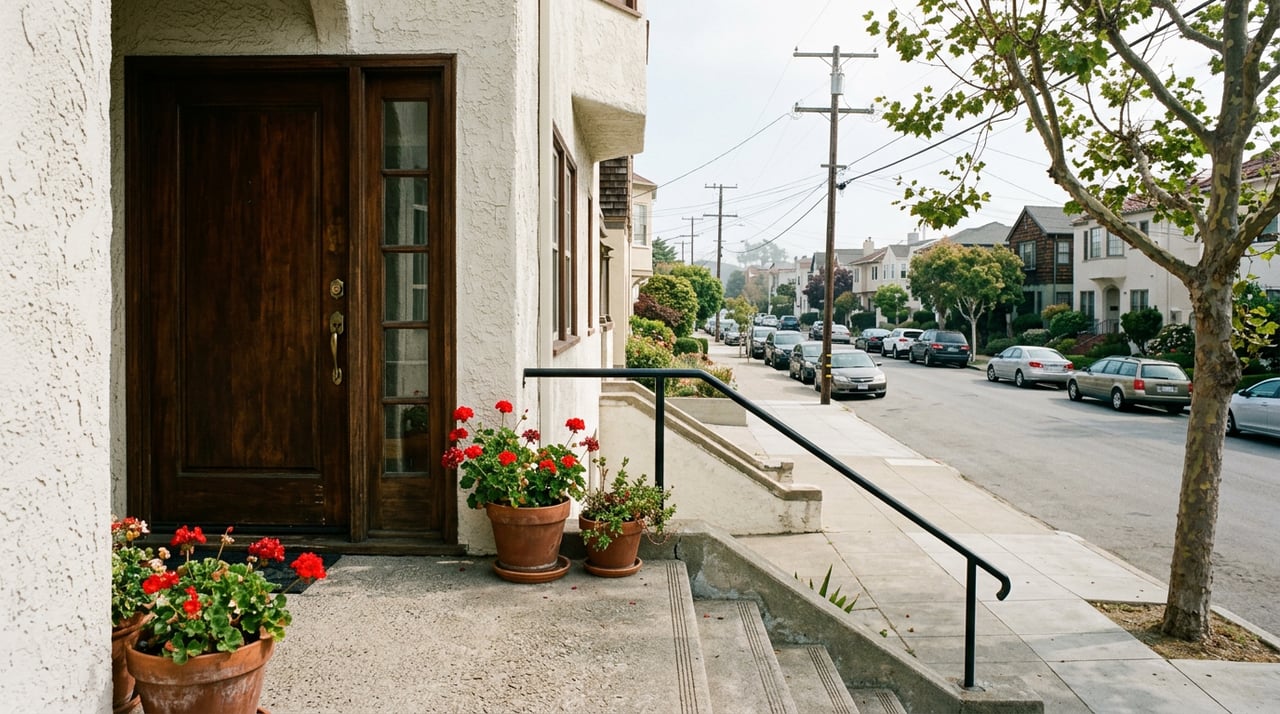
Walk Noriega or Taraval this month and you'll notice storefronts that sat empty for a year or more suddenly have contractors inside them, or doors already open. The easy read is that the Outer Sunset is having a restaurant moment. The more useful read, and the one that actually explains what you're seeing, is who is signing these leases. Every operator moving into this stretch already has a track record somewhere else in the Bay Area. Nobody is testing an idea here. They're relocating a proven one.
That distinction matters if you live in the neighborhood and want to know whether this run of openings sticks around or fades the way corridor trends sometimes do.
The Track Records Behind the Storefronts
Two Pitchers Brewing has been pouring beer in Oakland for seven years. Its new Outer Sunset taproom pours 21 beers, including a Baseline Lager priced at three dollars, which in San Francisco in 2026 is itself a small piece of news. The kitchen inside belongs to Maillards, which didn't start as a restaurant at all. It built its name as a stand at the Outer Sunset Farmers Market before earning a permanent kitchen, which means the smashburger you'd order there already has a following that predates the taproom.
Fifty Vara took over the old Sunset Reservoir space on Noriega. Owner Brian Reccow told the San Francisco Examiner he wanted something that feels "quintessentially Sunset," and the menu and room back that up rather than reading as a marketing line grafted onto a generic concept.
Near Ocean Beach, the long-vacant Beach'n space is becoming Ruby's, built out by Nick and Monique Osborne, who already run Mission Rock Resort. If you've eaten at their existing restaurant, you know their instinct for waterfront-adjacent, family-friendly rooms, which is precisely the read this location calls for. The building sitting empty for as long as it did, and now reopening under operators with a real track record, tells you more than any specific dish they've announced.
Black Jet had targeted a June 2026 opening with incoming general manager Max Newman, who cooked at Zuni Café and Marla before this. And Pàng moved into the old Dumpling Park space with a menu that mixes Chinese staples with riffs like mala-sauced popcorn chicken, a formula built by someone who already knows how to run a full-service kitchen, not a first concept finding its footing in public.
None of these are first-time bets. That's the pattern worth noticing before you notice the food.
Why Twelve Blocks Matters More Than Five Openings
Five new spaces, spread across roughly a twelve-block radius, is a different thing than five new spaces spread across the whole west side of the city. Density is what turns a handful of separate destinations into something you can actually walk between in one afternoon. A brewery, a burger kitchen, a Chinese restaurant, a coastal-facing family spot, and a coffee-and-cocktails bar within a short walk of each other means you don't need to plan a special trip to try any one of them. You just need a free Saturday.
That's a meaningfully different neighborhood experience than what existed here eighteen months ago, when most of these storefronts were either vacant or occupied by something unrelated to what's replacing it.
The Demand Side Nobody Advertises
New restaurants don't sign leases in a vacuum. Operators go where they believe people will already be walking, and in this stretch of the Sunset, that foot traffic is largely manufactured by the neighborhood itself rather than by outside promotion. The merchant group People of Parkside Sunset runs Movies in McCoppin every October and Holidays on Taraval every December, both free and both well attended, along with a Small Business Saturday on Taraval that has its own following. This is a corridor where the merchants' association programs the street on a regular calendar, which gives operators a reason to expect traffic on nights and weekends that would otherwise be unpredictable.
Compare that to the Inner Sunset, one N-Judah stop east, where persistent storefront vacancy on Irving Street led SF New Deal to launch its first Neighborhood Vibrancy Fund in July 2026, offering grants between $5,000 and $20,000 to as many as 20 small businesses specifically to address the problem. Both stretches of the Sunset are seeing new food and retail activity this year, but one needed an outside fund to fight vacancy while the other filled in largely on its own. That's not a knock on the Inner Sunset, which has its own wave of arrivals worth a separate look. It's a sign that the demand holding up Noriega and Taraval right now isn't a temporary subsidy. It's a merchant association that has been showing up on the calendar for years, plus a residential base reinforced by projects like MidPen's affordable housing development, which set aside units specifically for San Francisco Unified School District staff.
Supervisor Joel Engardio, whose district includes the neighborhood, has described the area's restaurants as becoming "destinations in the Sunset because of their unique dishes," which lines up with what's actually happening on the ground rather than reading as a talking point.
A Saturday That Didn't Exist Eighteen Months Ago
If you're mapping out a weekend and want to see what this run of openings actually adds up to, here's a version of it:
- Late morning coffee and a pastry at Black Jet once it opens, or your usual spot until it does
- A walk north along Ocean Beach toward the Cliff House end and back
- Lunch at Two Pitchers: a Maillards smashburger and a Baseline Lager on the parklet
- Afternoon browsing along Taraval, timed to the fourth-Saturday cleanup morning if you want to see the corridor at its most active
- Dinner at Fifty Vara on Noriega, or Pàng if you're bringing someone who wants something they can't easily get elsewhere in the city
- A nightcap back at Two Pitchers, fog permitting
That itinerary simply didn't exist in this configuration even six months ago. Most of the pieces weren't open yet.
What's Still Unproven
None of this is a sure thing yet. Black Jet's June 2026 target has already come and gone without a confirmed opening, and whether Ruby's follows before fall arrives in the next few weeks is the exact question hanging over the corridor right now. A cluster of proven operators betting on the same twelve blocks is a strong signal, but it's not a guarantee that every space opens on schedule or holds on past its first year. The honest version of this story is that the ingredients are unusually good right now, not that the outcome is already decided.
What is settled is the pattern itself: this isn't a neighborhood attracting first-time restaurateurs hoping to find an audience. It's attracting people who already have one, choosing the western edge of the city over the neighborhoods where new restaurants are supposed to open by default. That's worth knowing whether you're deciding where to eat this weekend or just trying to understand why your own corner of the Sunset suddenly feels different than it did last year.
If you're curious about what any of this means for property values or timing on the west side, or just want to talk through what's changing block by block, I'm always glad to compare notes. Reach out to Patrick Carney any time. Let's Connect.
